There has been an increasing awareness in recent years of the silliness of televised political debates. This dissatisfaction is fueled in part by growing awareness of alternative models of political discourse, notably the long-form Joe Rogan interviews of politicians such as Bernie Sanders and Tulsi Gabbard. Hearing in-depth conversations in a more accountable setting draws a damaging contrast to mainstream TV debates where complex topics such as ‘foreign policy’ and ‘the economy’ are often given only 15 minutes of air time.
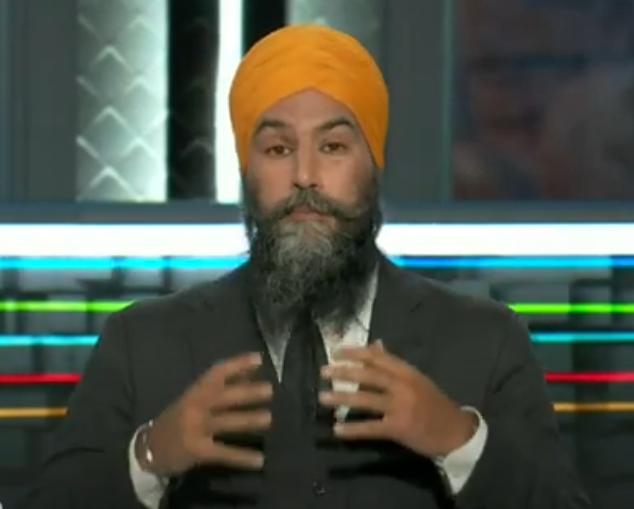
There was a moment during the 2021 Federal leaders debate in Canada—courtesy of Jagmeet Singh and Rosemary Barton—that epitomized the uselessness of the current model. Though some time has passed since the incident, it is worth revisiting. Barton pointed out that attempts to cool the housing market are popular among those who do not own homes but unpopular among current homeowners with home equity. Barton then asked Singh this question: “So what is more important to you? Helping younger people get access to the market or allowing older Canadians who rely on the value of their homes to live?”
Singh answered and Barton rebutted, and then came Jagmeet’s final statement. In response to whether he would prioritize maintaining value in the market or reducing house prices, Mr. Singh rested his case by saying “we can do both.” Perhaps not surprised by a politician giving such a meaningless answer, Ms. Barton thanked him and moved on.
Canadians ought to seriously reflect on this interaction. There have been few moments in recent memory that so clearly demonstrate the charade of televised political debates. On perhaps the single most urgent topic for young Canadians and in the middle of one of the worst housing crises in Canada’s history, Ms. Barton allowed Mr. Singh to give an entirely dishonest and absurd answer.
You cannot do both. Every measure the government uses to address the housing crises is designed to affect supply or demand. Taxing foreign buyers lowers demand (in theory), so too does raising interest rates and mortgage stress tests. Building more houses, something most major parties promised to do in the 2021 election, increases supply.
It does not matter which approach is taken, increasing supply or decreasing demand, the purpose is to lower the cost of housing. Mr. Singh cannot wave his hands and put a protective bubble around the value of existing homeowners’ property while lowering the market for new buyers.
The leader of Canada’s third largest political party was essentially asked whether he would lower or maintain the current price of homes, and he answered—with no pushback from the other candidates or moderators—that he would do both. A clearer example could not be provided of how broken Canada’s leadership debate model is.