With the formation of the People’s Party of Canada (PPC) comes the possibility of a new schism in Canada’s Conservative movement. Maxime Bernier’s foundling party has yet to do significant damage to the Conservative Party of Canada (CPC) over two elections, but the very existence of the PPC raises old ghosts and new questions.
For those unfamiliar with Canadian politics, the CPC was formed in 2003 with the marriage of the Canadian Reform Conservative Alliance and the Progressive Conservative Party of Canada. Stephen Harper became the party’s first leader and won minority governments in 2006 and 2008 as well as a majority government in 2011. While the Liberals under Justin Trudeau have formed government since, the CPC won the popular vote in both 2019 and 2021—though still winning far less of the vote than the various left-leaning parties combined.
Canada is a liberal country, and if the Liberal, New Democratic and Green parties ever do as the political right did and unite under a single banner, the Conservatives would never win another election. As it stands, disunity on the left and unity on the right is the only reason the Conservative Party is a serious political contender, so there is understandable fear that the upstart PPC could become a threat. This is why, for those paying attention to the repartee between the parties and their supporters, accusations of splitting the vote are common. This is the old ghost in the conservative mind: fear of a fractured right-wing movement in a largely liberal country.
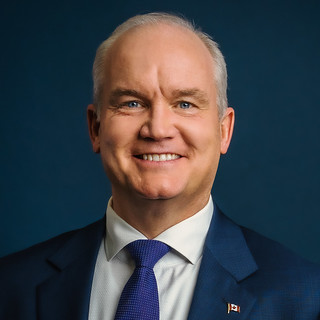
But there are new questions that need to be answered. Erin O’Toole—the current CPC leader—has branded a new type of conservatism that has some wondering what exactly he is trying to conserve. While the CPC is still a right-leaning party next to Trudeau’s Liberals, placed in another context—say, an American election—O’Toole’s party would undoubtedly be left of centre. The question the new People’s Party of Canada poses to conservatives is why they should continue to vote for a party that is conservative only in name. While it is perhaps a step too far to argue that there is nothing conservative about the CPC, the question has merit and deserves the attention of Canadians.
The CPC under O’Toole is making a gambit. The party clearly intends to capture the middle vote—and perhaps even the moderate left vote—by pitching itself as a fiscally responsible centre party. Under O’Toole, the CPC has abandoned any hint of social conservatism, appears terrified to take a meaningful stand on vaccine mandates, and has adopted similar positions to the Liberals on immigration, climate policy and much else. And here is the crucial part: the party needs to implement these changes while maintaining its traditional support. The notion that the base has nowhere else to go underpins the whole strategy.
It remains to be seen if this approach will be effective, though O’Toole winning fewer seats than Andrew Sheer (a self-proclaimed social conservative) in 2019 is not promising. The enduring problem with the CPC strategy is that those on the Right will continually find it difficult to vote for a party that is conservative only in name, while those on the Left will struggle to vote for a centrist party with conservative in the name. O’Toole may be aggravating and disenfranchising his base with little discernible benefit to justify his policy changes.
And waiting on the side-stage is the People’s Party of Canada. If the Conservative Party continues to neglect right-wing principles, the PPC will have a chance to grow. Some would celebrate this change, but it would almost certainly result in a disunited conservative movement with little chance of forming government. Conservatives in Canada are in the unhappy position of choosing between a party that is less and less conservative and a fractured movement that has little chance of electoral success.
The key question many right-of-centre voters must weigh is whether winning really matters if the government formed is not actually conservative in the ways that matter.