The West is not finished — not by a long shot. We’ve faced far darker hours and emerged victorious.
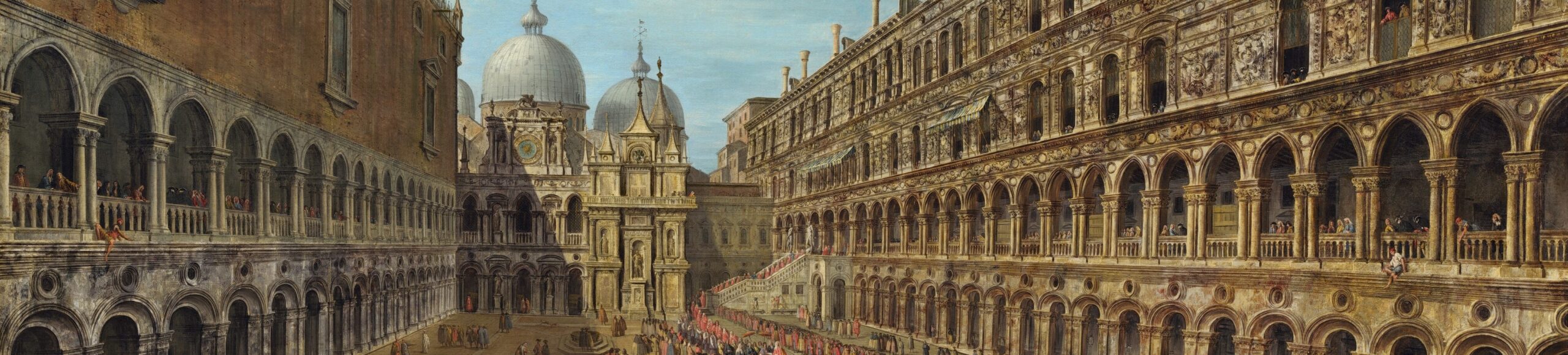
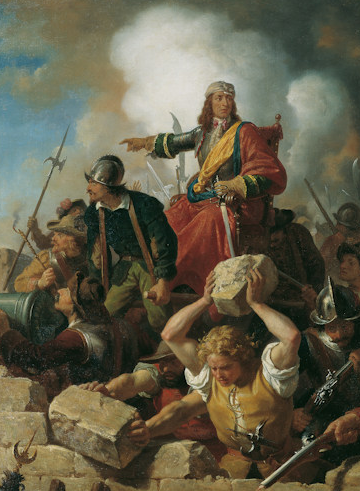
Muslims ruled the Iberian Peninsula for nearly 800 years before the Spanish defeated the Moors at the Battle of Granada in 1492, led by Catholic monarch Ferdinand II. The Ottoman Empire destroyed the Eastern Roman Empire in 1453, ending 2200 years of unbroken Roman civilization. The Ottomans continued their aggression and nearly conquered the central-European Habsburg Empire—the dominant force in the region at the time. They battled at the gates of Vienna twice: once in 1529 and again in 1683.
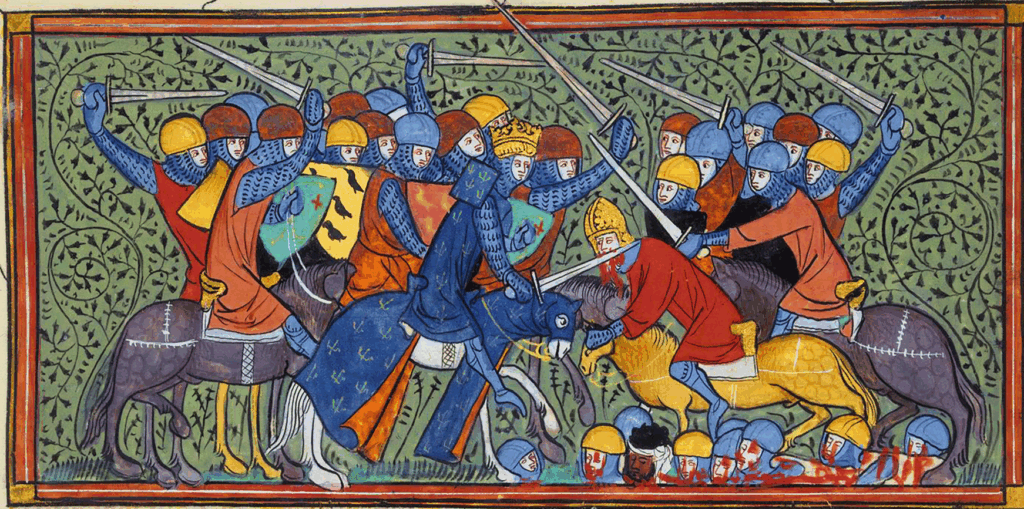
Through all this violence and turmoil, European nations persevered, shedding their blood and giving their lives to defend the homeland. The story of the West, then, is not one of unchallenged dominance, but one of struggle, sacrifice, near annihilation, remarkable courage and unbreakable spirit.
So what is happening now?
Europe today is not fighting some terrifying new enemy or empire. It is doing something far stranger — and without historic precedent — it is committing suicide.
The peoples of Europe are not standing bravely on the ramparts as armies batter the gates; they are cowering in their homes, terrified of saying anything that might be deemed racist or offensive. Many modern Europeans are so weak and spineless that they will not only refuse to die for their nations, they won’t even risk being called mean names for them.
The result: Europe’s defeat in the modern era is delivered not by armies, but by unarmed migrants drifting unchallenged onto its shores. After surviving centuries of war and bloodshed, Europe’s cultural death toll will come from rapid demographic change.
We’re all avoiding the hard truth that Europe will vanish within the next 100 years. Not in land or language — Britain and Germany will still exist, France will probably still speak French — but they will be little more than shells of their former selves. The people and heritage that ignited the spiritual flame of these nations will be gone.
This is all, of course, perfectly avoidable and still reversible. There are clear and simple ways we could begin to save the West: immigration moratoriums, mass deportations, and militarized borders and sea lanes. We could end the obvious manipulation of refugee and asylum claims, offer financial incentives for recent immigrants to return home, end birthrate citizenship and ban dual nationality. All this could be done. And if laws need to be rewritten and processes changed to allow muscular solutions to these problems, so be it.
But we won’t do any of this.
The reason we remain paralyzed by inaction is because the problem Europe faces today is not a practical one: it is an ideological and spiritual one. We don’t have the will to defend ourselves, despite possessing the means to do so.
Strangely enough, this was all predicted decades ago.
The Camp of the Saints is a fascinating novel written by Jean Raspail and first published in France in 1973 under the title Le Camp des Saints. Its premise centers on one million refugees who set sail from India and arrive on the shores of France. Although France possesses the military strength to easily repel such a vulnerable flotilla, its leadership lacks the courage and unity to act. Instead, they embrace the migrants out of a dangerous blend of humanitarian idealism and cultural guilt. As a result, French—and more broadly, European—culture and heritage are effectively undone, not by force of arms, but by demographic transformation.
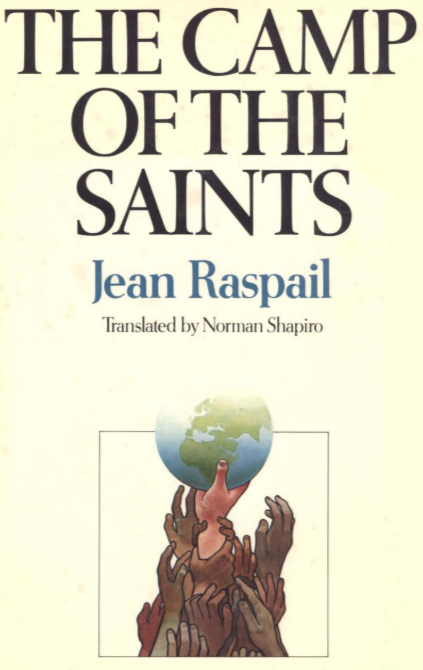
At the time, the book was widely criticized and mocked for being unrealistic and apocalyptic, but Raspail insisted on its predictive power. He was not necessarily arguing that the events would occur exactly as he described, but he was warning that the ideological fortifications of Europe were completely destroyed. Western post-colonial guilt and civilizational shame, he argued, guaranteed both that a mass influx from the Third World was inevitable and that Europe would be ideologically incapable of stopping it. As Raspail states in his preface, “even if the specific action, symbolic as it is, may seem farfetched, the fact remains that we are inevitably heading for something of the sort.”
Many of the key ideas of Jean Raspail’s book remain true today. Europeans are still the majority population in every European and Commonwealth country and could easily turn the tide to maintain their culture and heritage. Despite the immense damage done by migrants and refugees, the continent could still recover if it musters the will and the confidence to defend itself.
But will that happen?
Doubtful. And we will all be the poorer for it.
Or maybe, just maybe, a spiritual flame will spark in Europe, a distant memory echoing down from past to present, a call to action picked up by an inspired European youth that insists on a future of Europe…for Europeans.
The West is not lost. If our ancestors could overcome the perils they faced, what excuse have we?